SOCIAL AND EMOTIONAL NEEDS IN AGEING -A Project Reflection
Graduation Project | 2022
Collaboration with Biyomod
Where it started
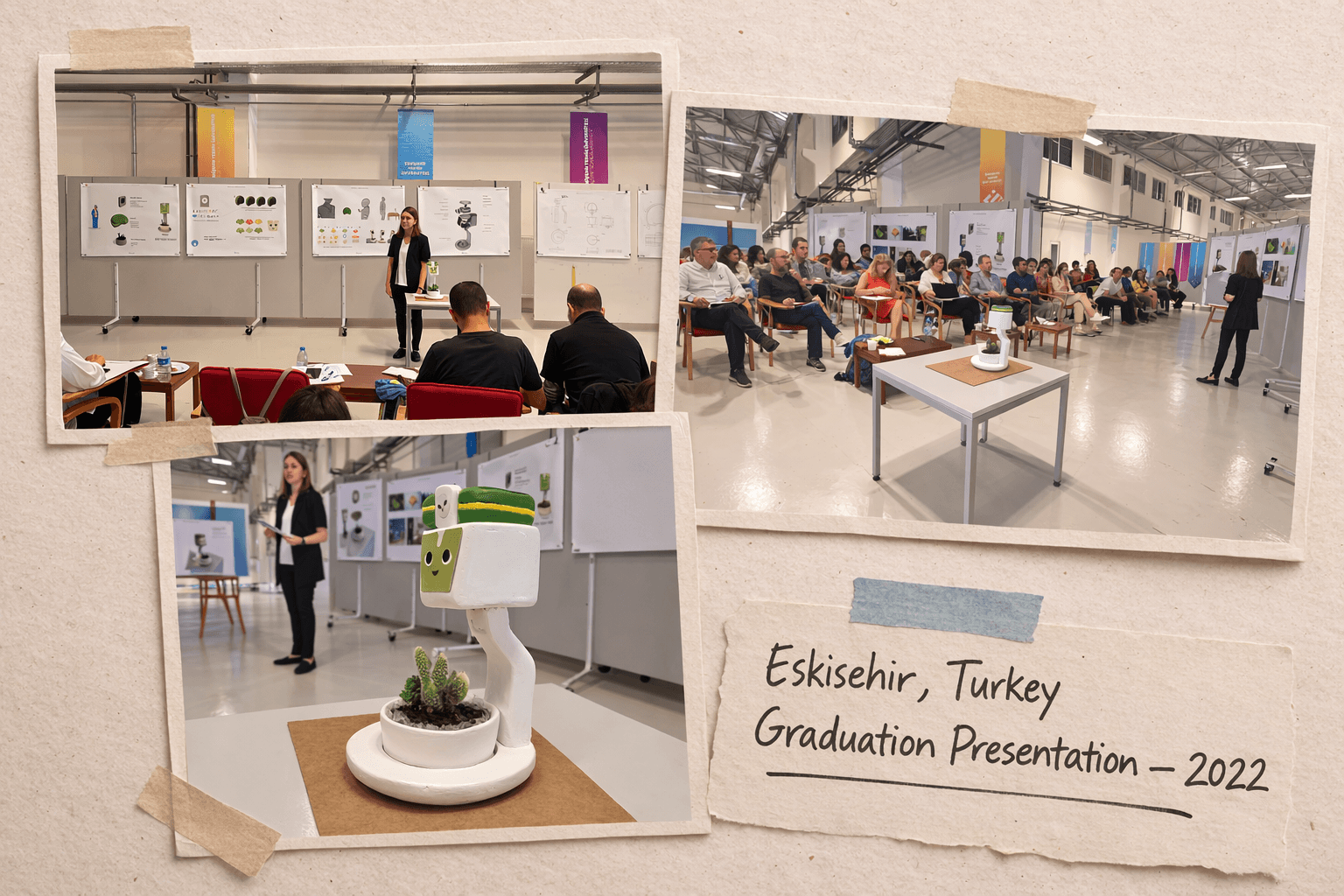
This was my final year graduation project at Eskişehir Technical University, developed in collaboration with Biyomod, a biomedical company. The brief was simple: develop a full industrial design project in collaboration with a company. The topic, the problem, the direction: all of that was mine to define.
I had full ownership of the process. Finding the problem, writing the brief, doing the research, designing the solution, building the prototype, presenting the outcome. Everything was mine to figure out.
I chose this topic because I was genuinely curious about it. Not because it was safe or easy, but because I felt there was something real to understand there. Something most products in this space were missing.
The Research
I started by stepping outside.
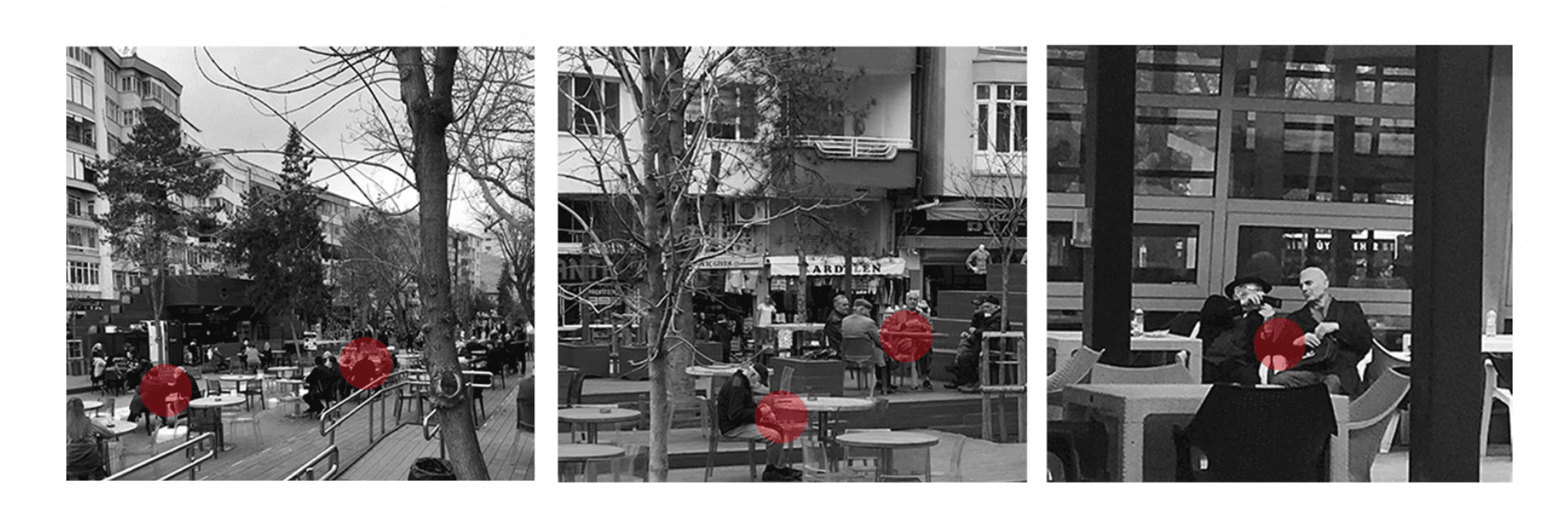
Before any desk research, I went to Hamamyolu in Eskişehir on a Saturday afternoon to observe how elderly people actually used public space. How they moved, where they gathered, who they were with. I wanted to see the reality before I read about it.
From there I ran interviews, asking not about technology or products, but about daily life, connection, and routine. I also dug into demographic data, existing research on ageing, and the landscape of products already designed for this space.
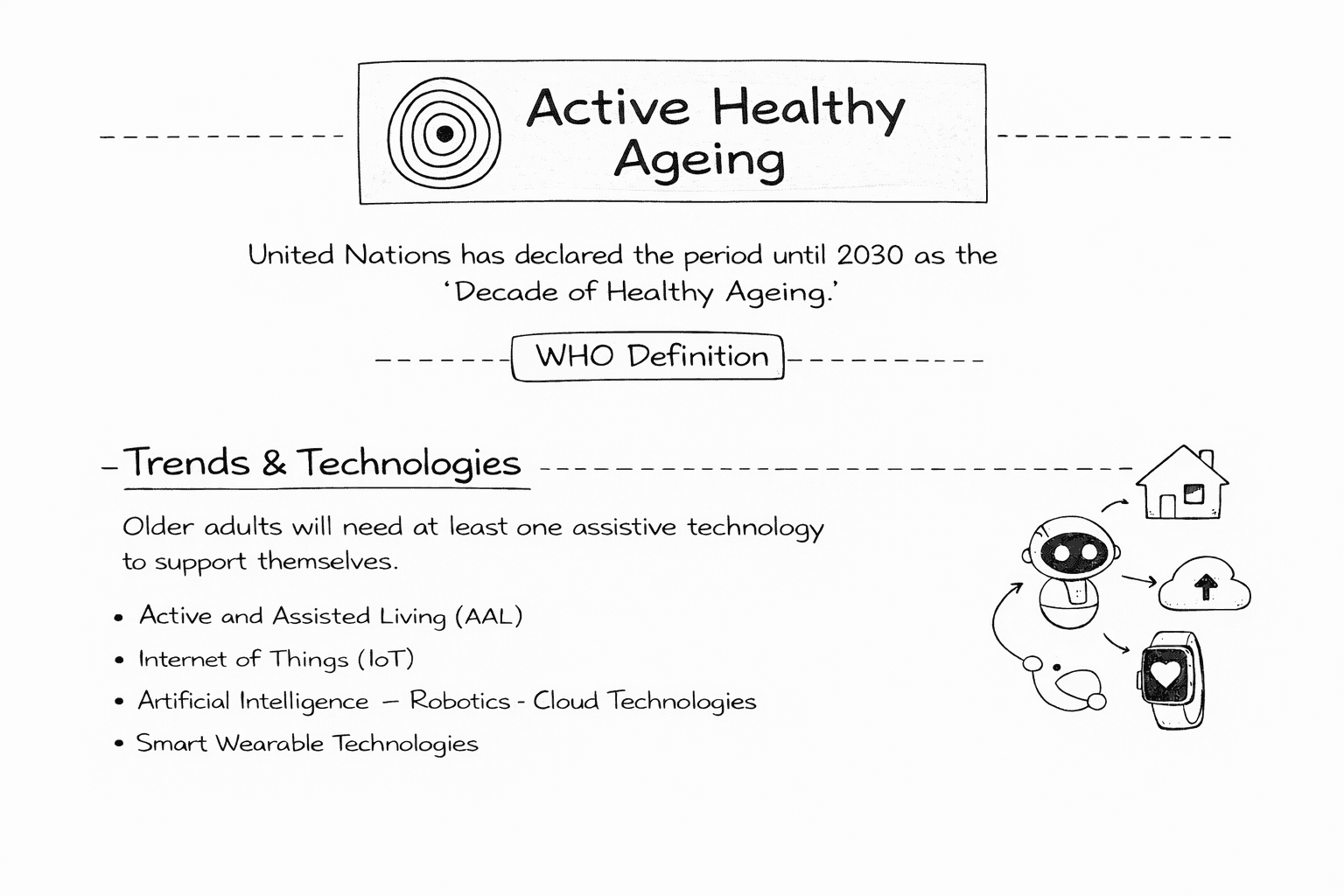
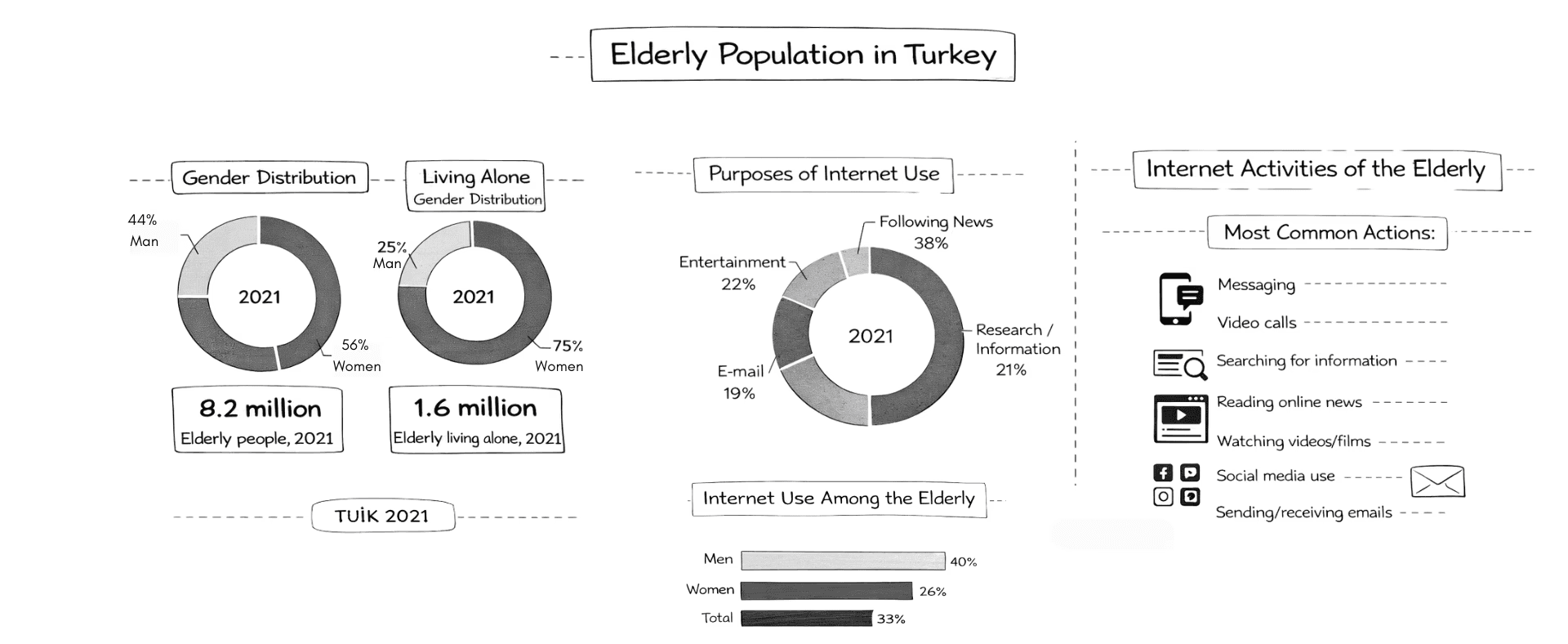
The statistics were striking. By 2030, one in six people globally will be over 60. In Turkey alone, over 1.5 million elderly people were living alone in 2021. The United Nations had declared this the Decade of Healthy Ageing.
But the numbers weren't what moved me. The interviews were.
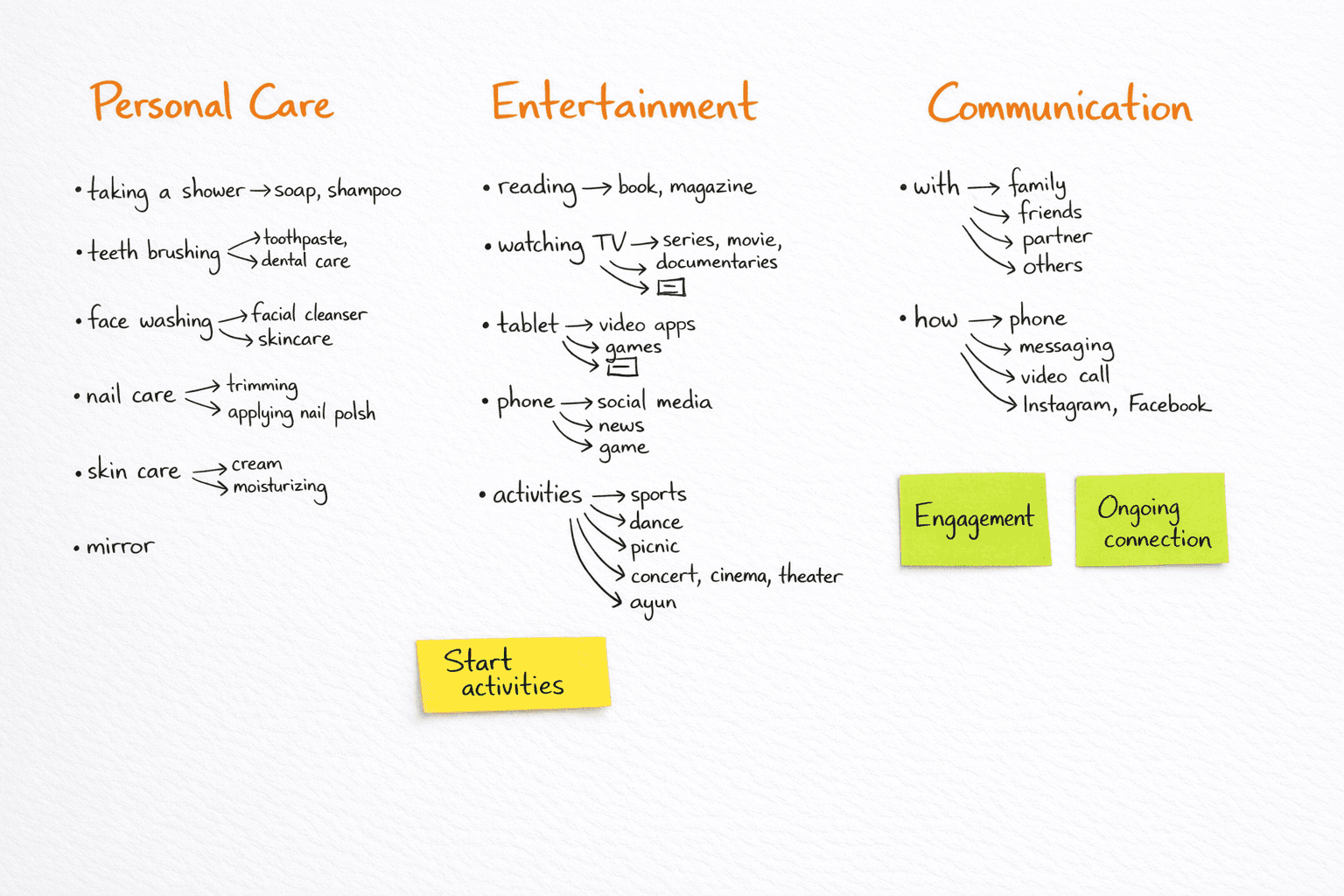
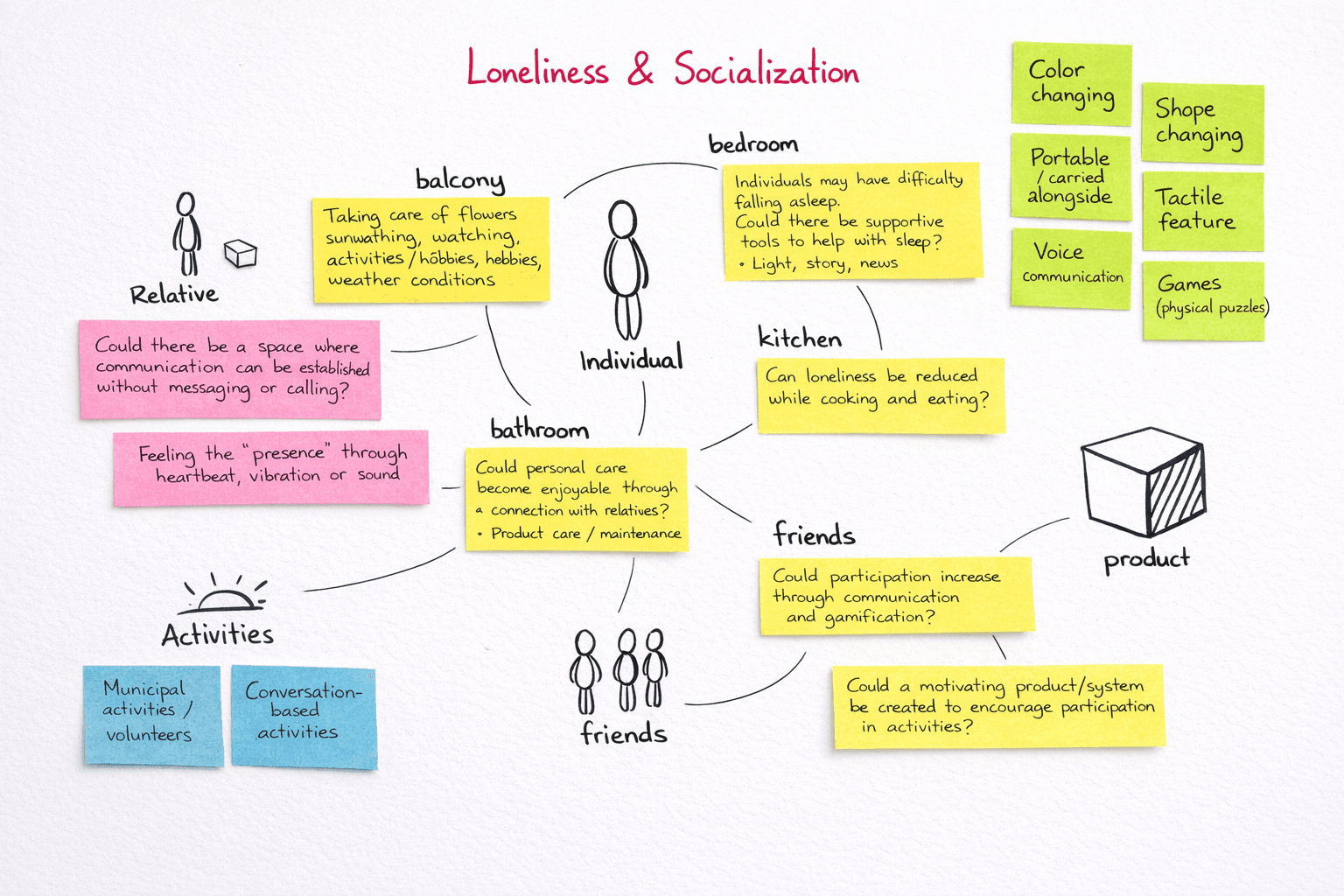
What I Found
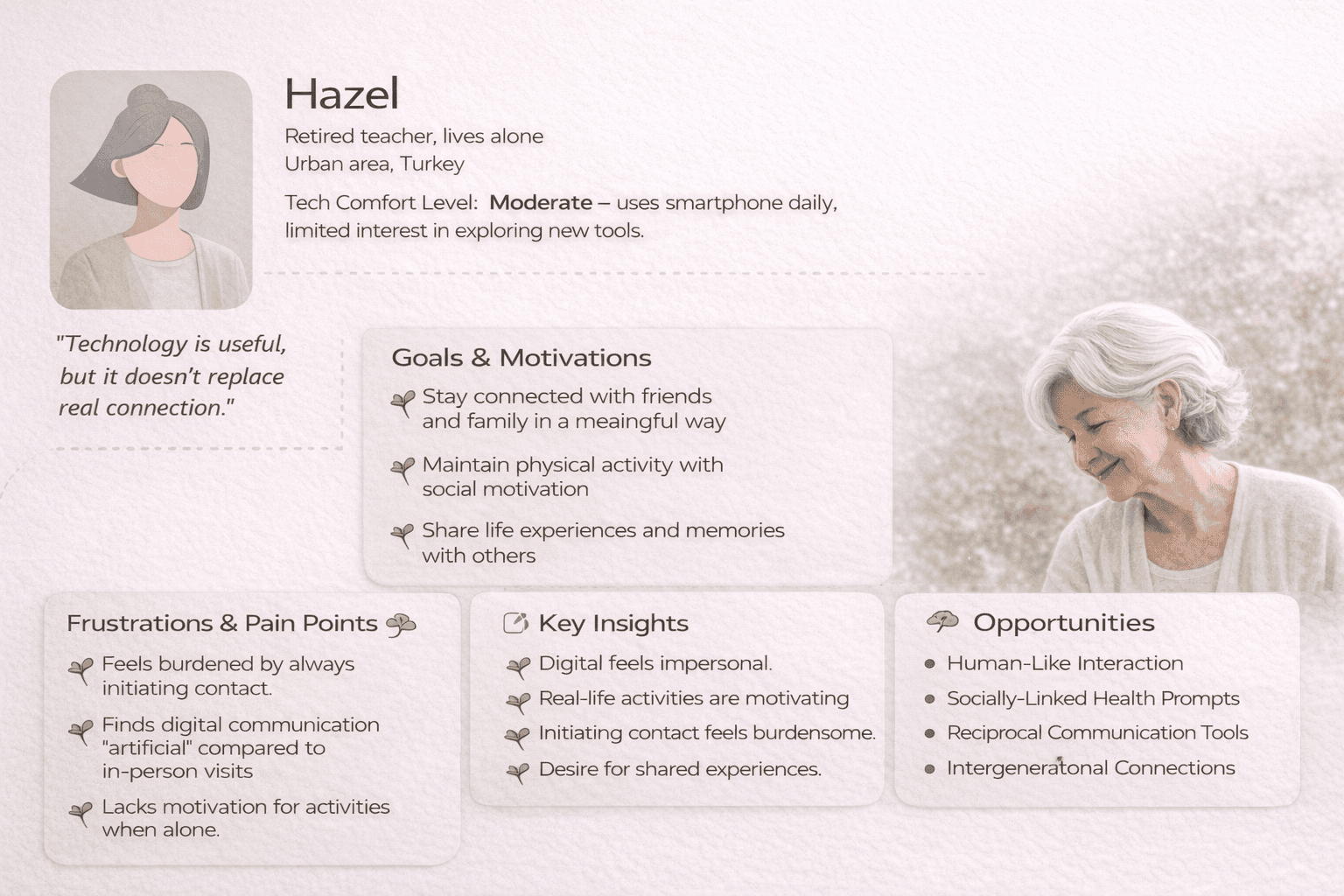
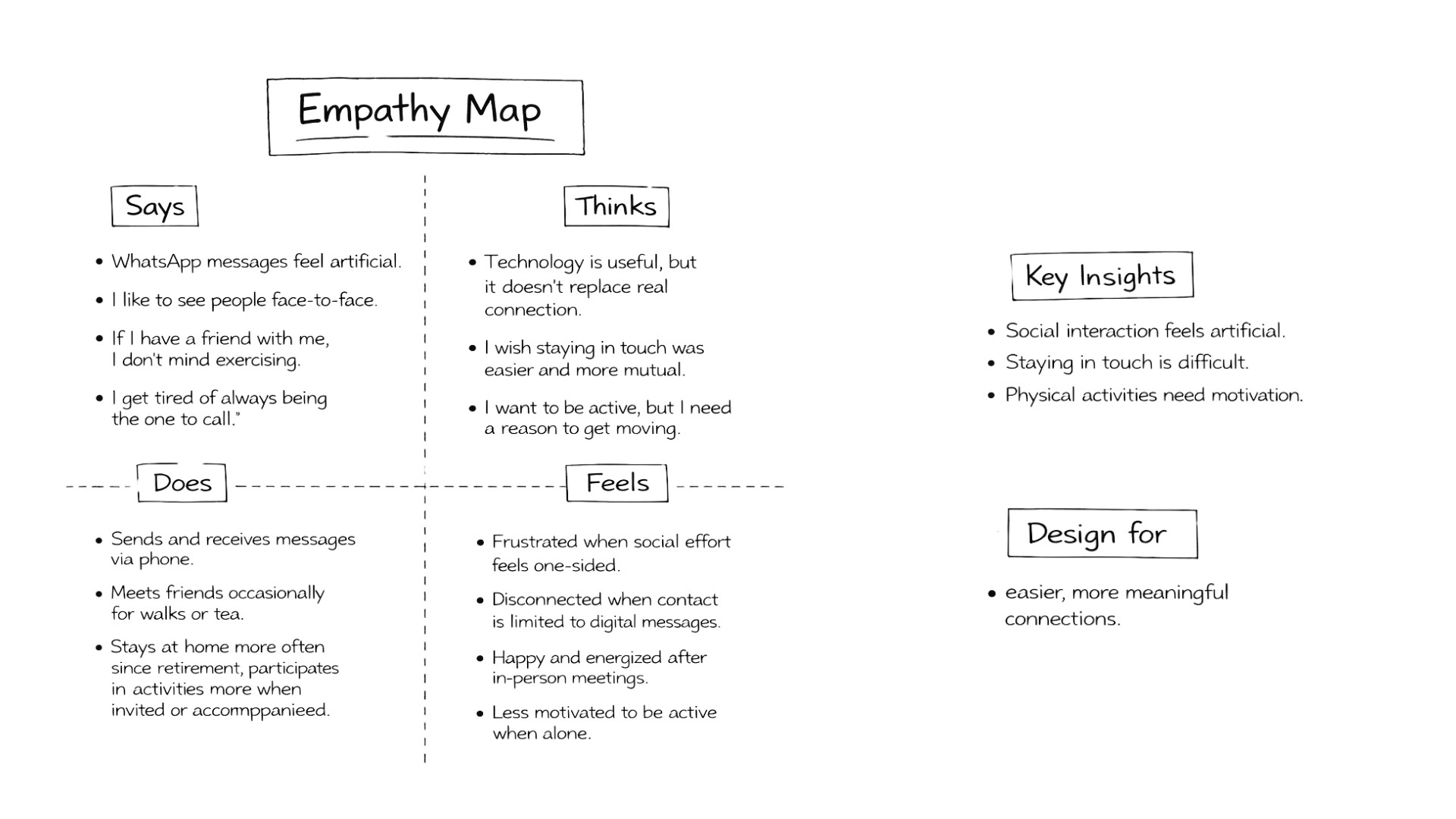
One participant said something that stayed with me. She talked about walking with friends, but less often since the pandemic. She talked about WhatsApp messages that felt impersonal. She mentioned suddenly remembering an old friend she hadn't called in a long time, realizing she had simply forgotten. And then she said:
"I get tired of always being the one to call. I'd like people to come to me sometimes."
That sentence unlocked the whole project for me.
The problem wasn't that elderly people lacked technology. They had phones, tablets, messaging apps. The problem was that the social connection infrastructure around them had quietly broken down. Communication had become one-sided, effortful, and artificial feeling. And nobody was designing for that.
Four things kept appearing across all the research:
Loneliness was not about being alone. It was about feeling like a burden, always initiating, never being reached out to first.
Digital communication existed but felt wrong. WhatsApp messages were functional but emotionally insufficient. People missed spontaneous, mutual, in-person connection.
Motivation to go outside was tied to social reasons, not health reasons. People moved more when someone was waiting for them.
Technology was not the barrier. The attitude toward it and the way it was designed for this age group was.
What I Designed
The brief asked for a product. So I designed one.
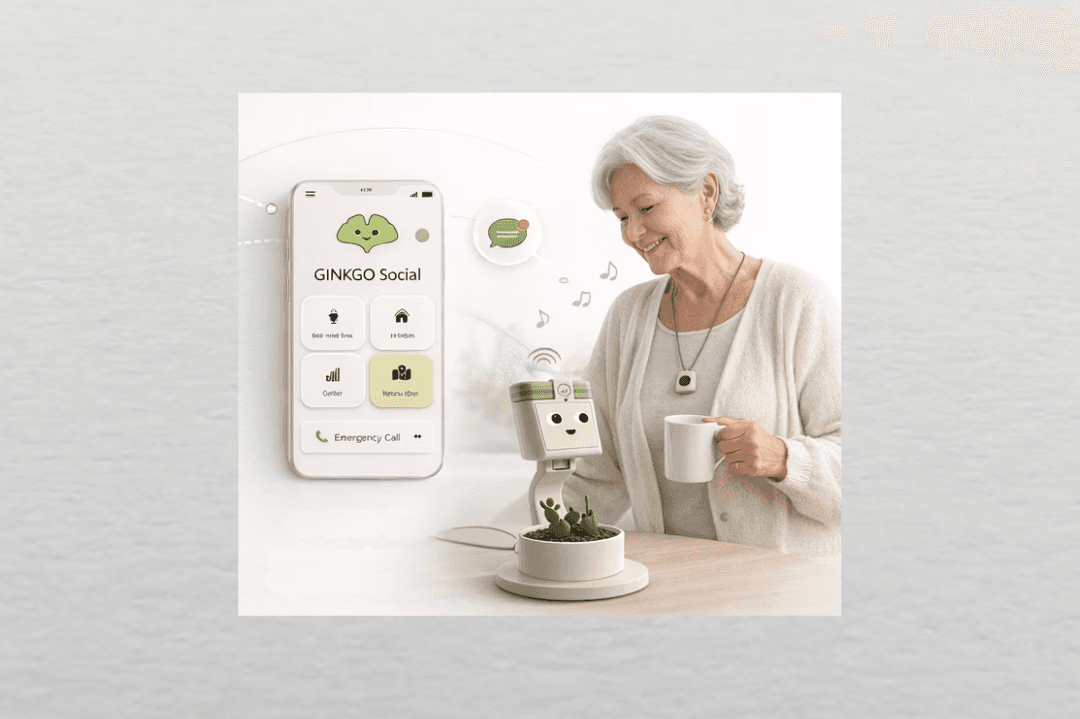
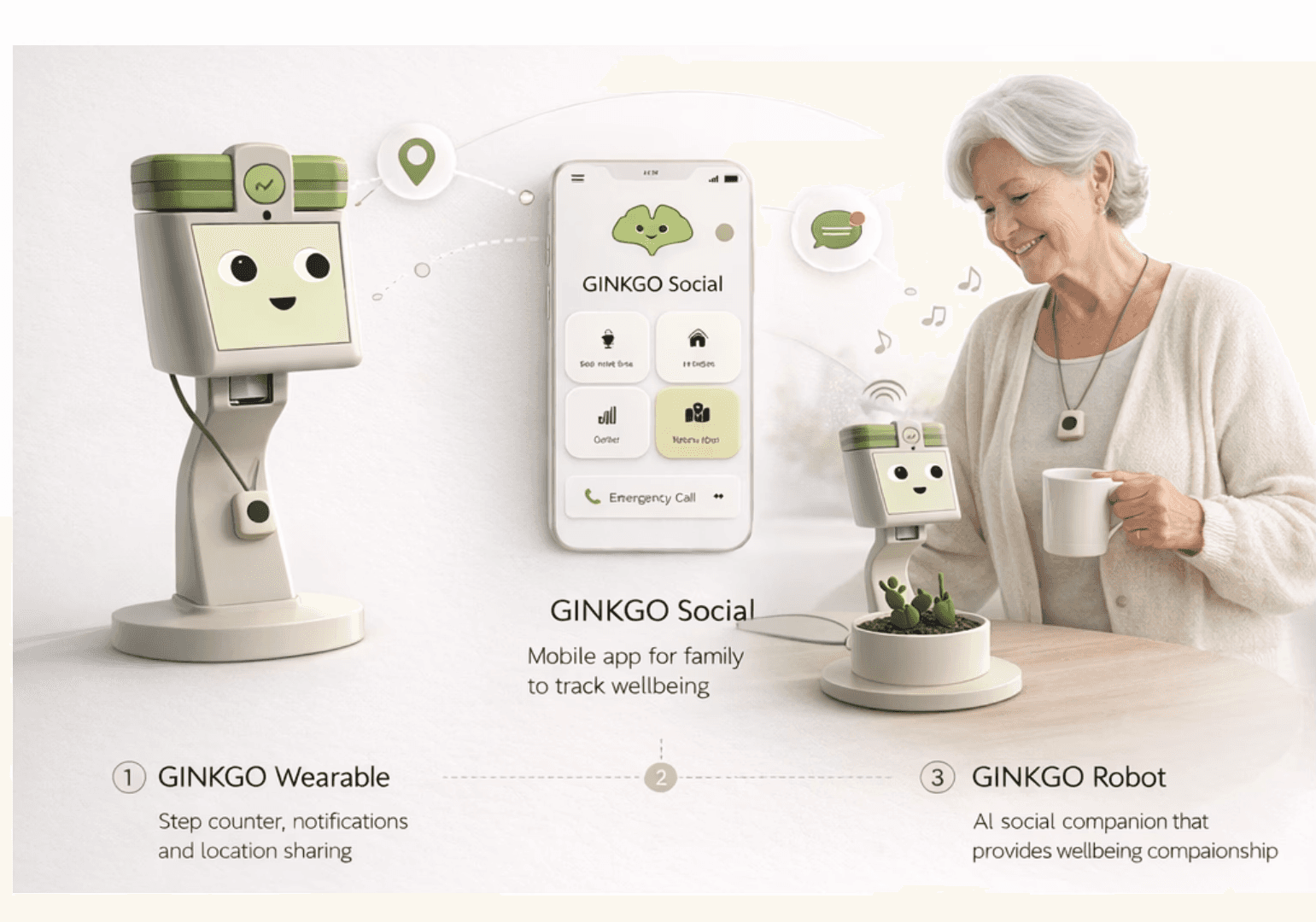
Ginkgo is an AI-powered companion device for adults aged 65 to 73, designed to support healthy ageing through socialization, activity and daily routine. Named after the Ginkgo Biloba tree, which symbolizes longevity, resilience and peace.
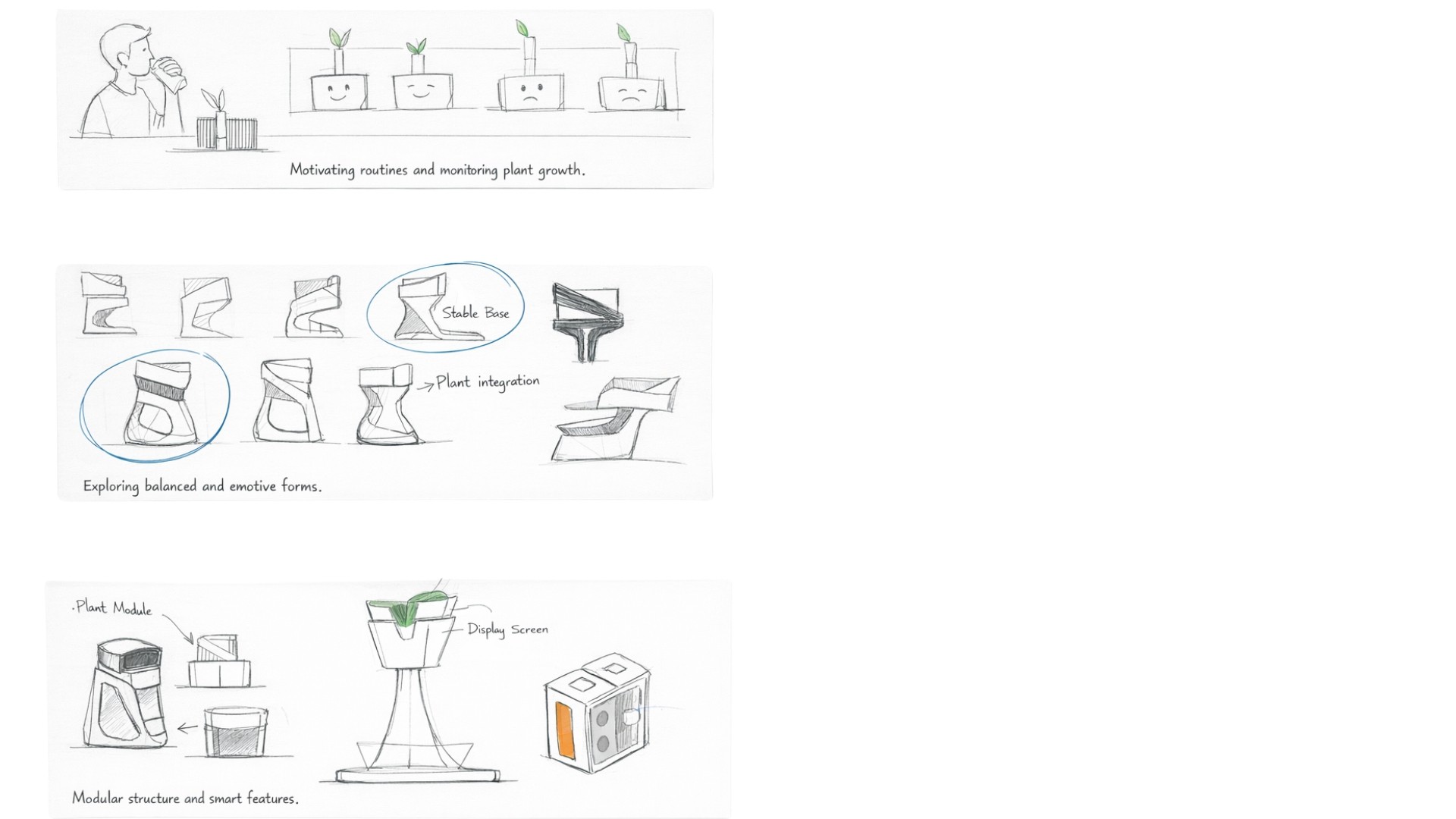
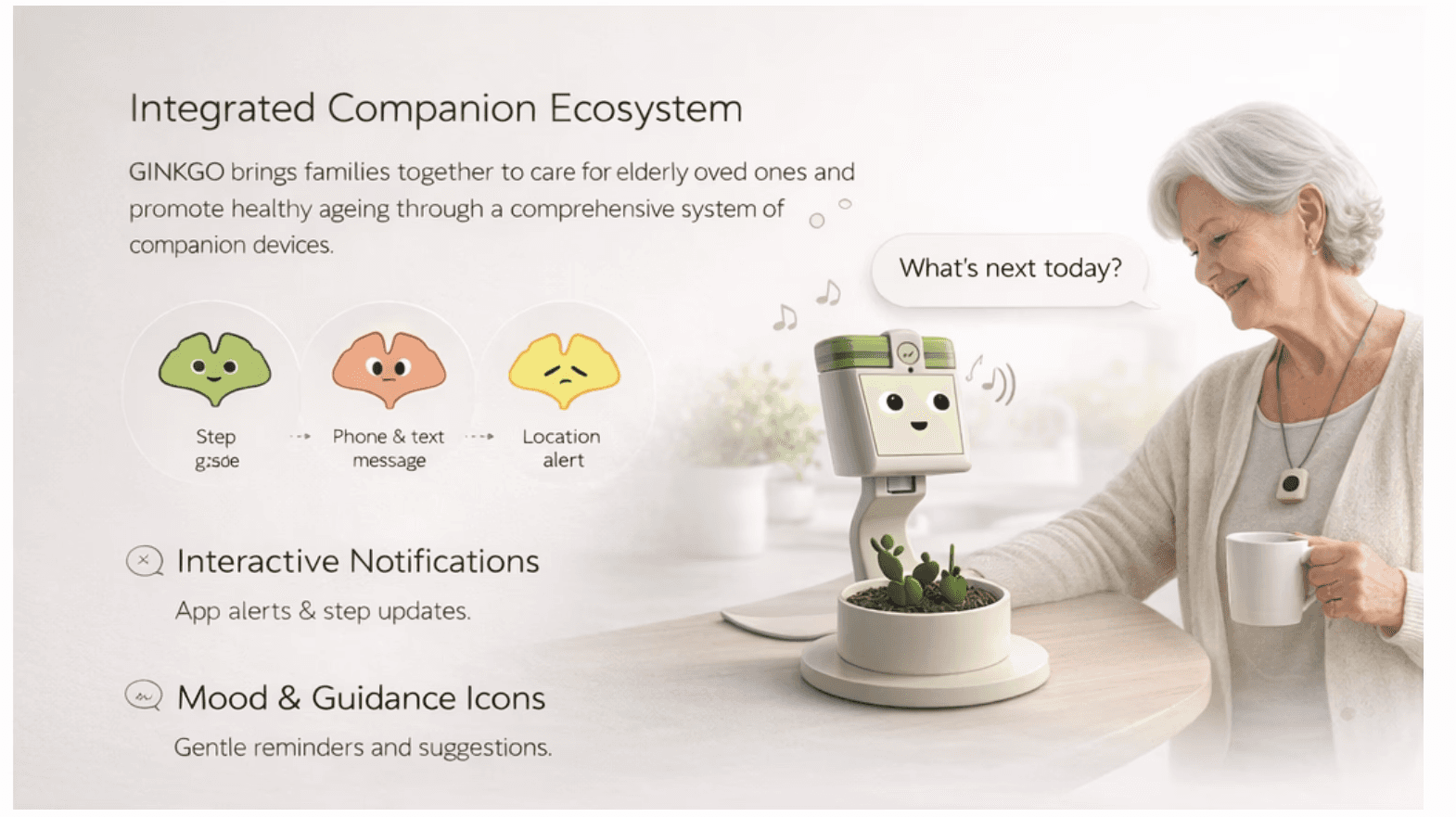
The system has three components. A home companion unit with an expressive face that reacts to the user's activity levels. A portable speaker module for entertainment, voice communication and reminders. And a wearable accessory for outdoor activity tracking and event participation.
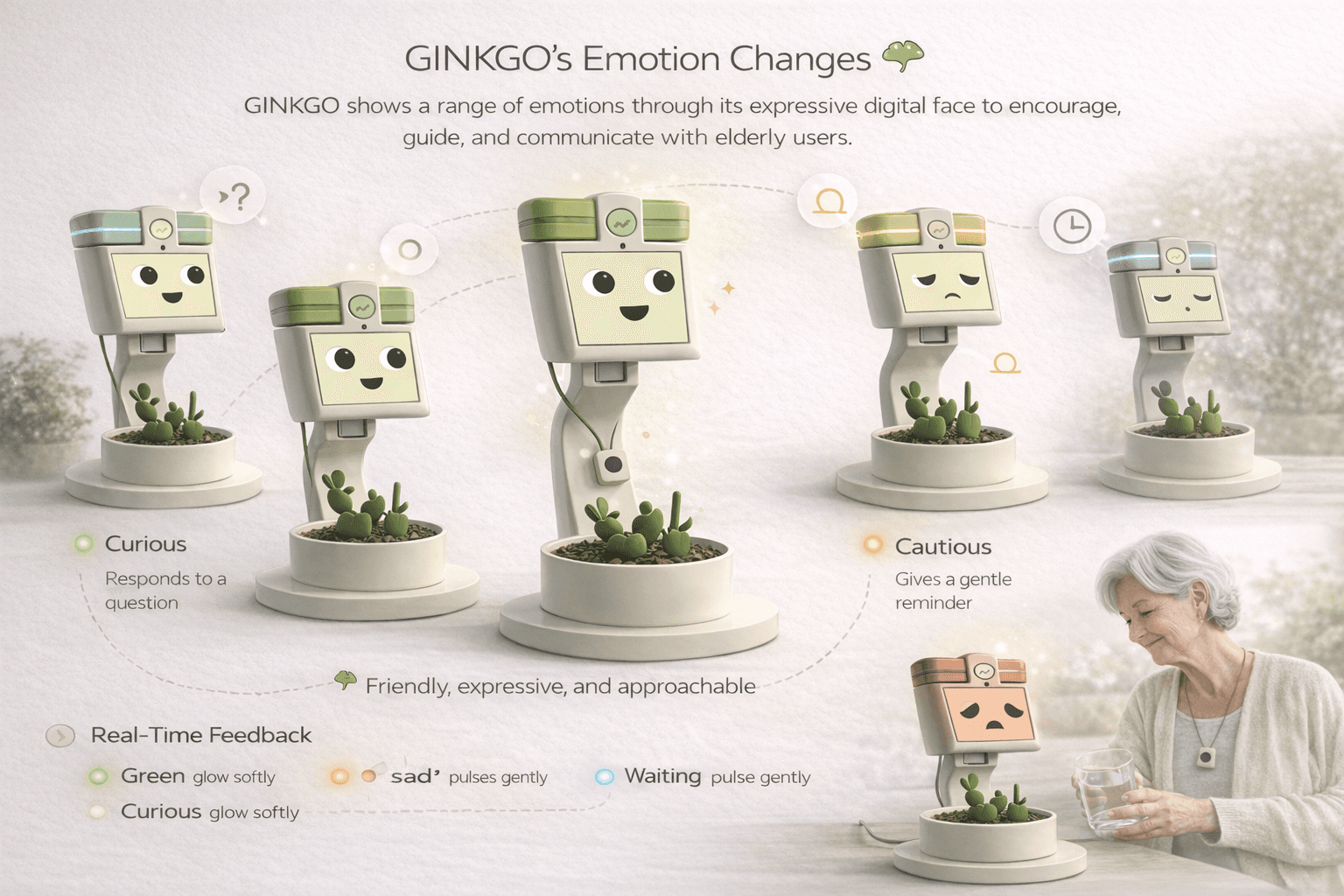
The core idea was simple: the more active and connected the user was, the more alive Ginkgo would become. If they went for a walk, called a friend, or tended to the small plant that came with the device, Ginkgo would respond visibly with warmth and color. If they became isolated and inactive, Ginkgo would show that too.
Activity was the input. Connection was the goal. The product was the bridge between the two.
Looking Back
Looking at Ginkgo now, I see it clearly for what it is. A thoughtful student project with real research behind it. And also a product that exists in a very crowded space.
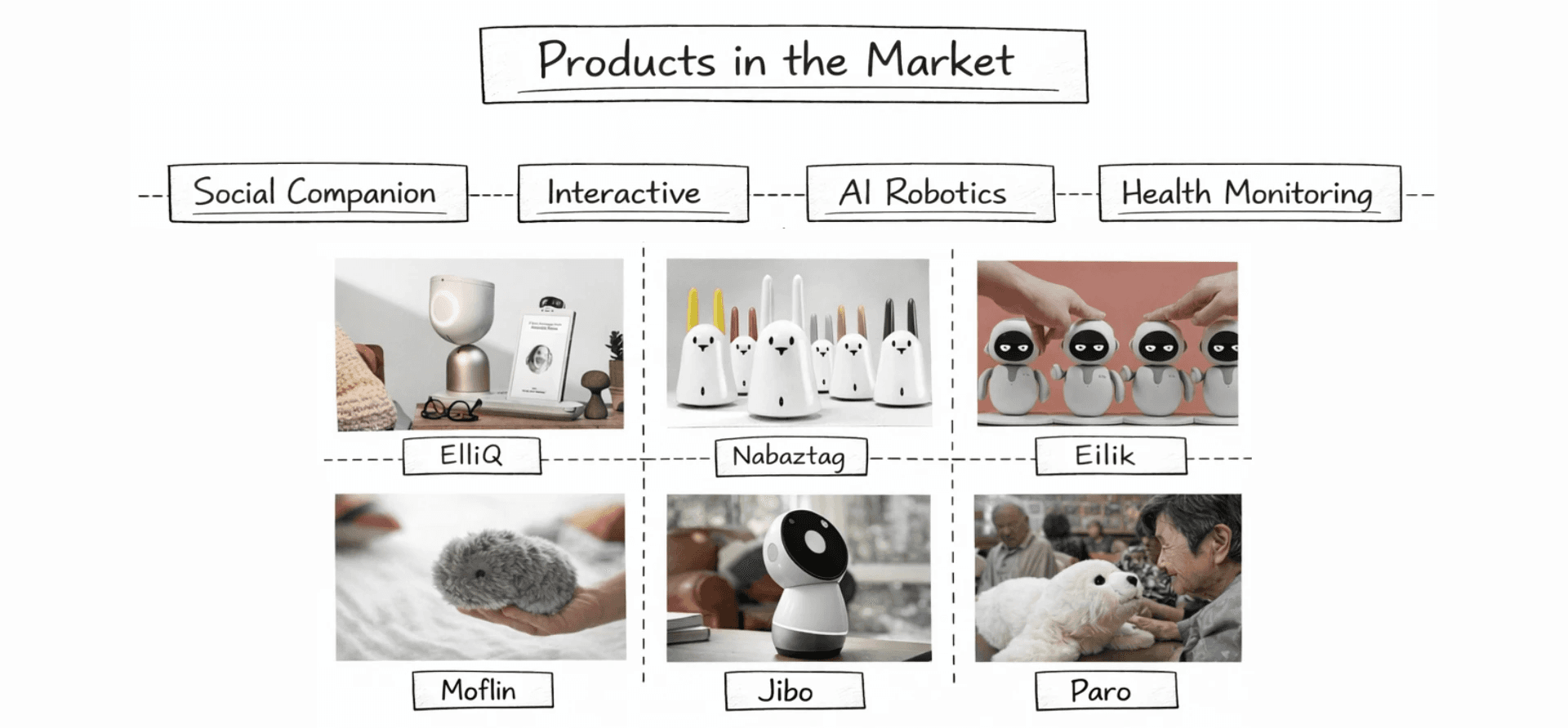
There are already many companion robots for elderly people. ElliQ, Jibo, Paro, Moflin. Some of them are genuinely well designed. When I look at Ginkgo next to them, I see a familiar solution to a familiar framing of the problem.
What I don't see reflected in the product is the most important thing I actually found in the research. The problem wasn't a missing device. It was broken social connection touchpoints. It was the design of communication itself between elderly people and the people around them. A robot in the living room doesn't fix the fact that nobody initiates contact anymore.
That gap between what the research revealed and what the product addressed is something I carry with me. It's why I moved toward service design. Because the real intervention needed wasn't a product. It was a systemic rethinking of how we design for human connection across age and distance.
Looking back, there's an experience from 2019 that I now see differently. During my Erasmus exchange in Czech Republic, we were invited to practice English conversation with elderly Czech women who were taking language classes. I sat with a group of women who were warm, sharp, curious and full of life. They talked about helping their grandchildren, taking dance classes, learning new things.
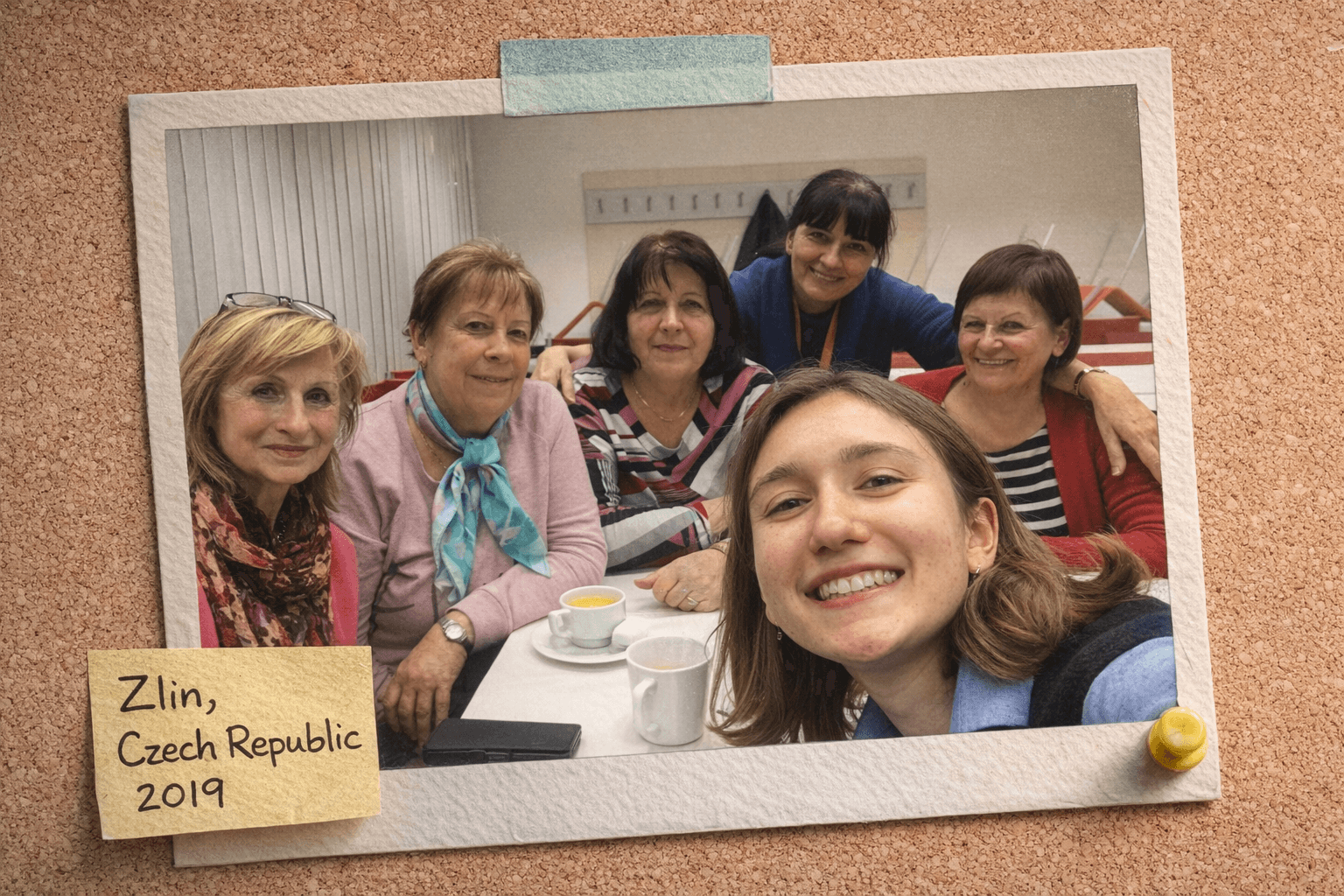
At the time I didn't connect it to anything. But when I started researching ageing in Turkey three years later, that memory kept coming back. Those women were active, connected and motivated, not despite their age but through it. Language classes, international conversation clubs, time with grandchildren. The right activities and the right social structures around them were creating exactly what the research in Turkey showed was missing.
The experience of ageing is shaped by culture, community design, and the expectations a society has of its older people. That's not just an observation. That's a design opportunity.