Perfume Business Plan
A SCENT OF YOUR OWN | Business Concept & Brand Strategy | 2024
Where it started
This project began with a personal curiosity. As a designer and a nature lover, I've always been drawn to the beauty of creating, not just objects, but experiences that awaken the senses.
I wanted to craft my own natural perfume using pure essential oils. What started as a home experiment quickly became something much more meaningful. The process of blending scents surprised me. It wasn't just about making a fragrance. It was about expressing myself and connecting with nature on a deeper level.
The greatest joy came from sharing these creations with people I loved. It became a gift, not only for them, but also for myself.
In Turkish, my name Ece means Queen. This project celebrates the idea that we each have the power to create something unique, personal and special, and to feel genuine ownership and pride in what we make.
The concept
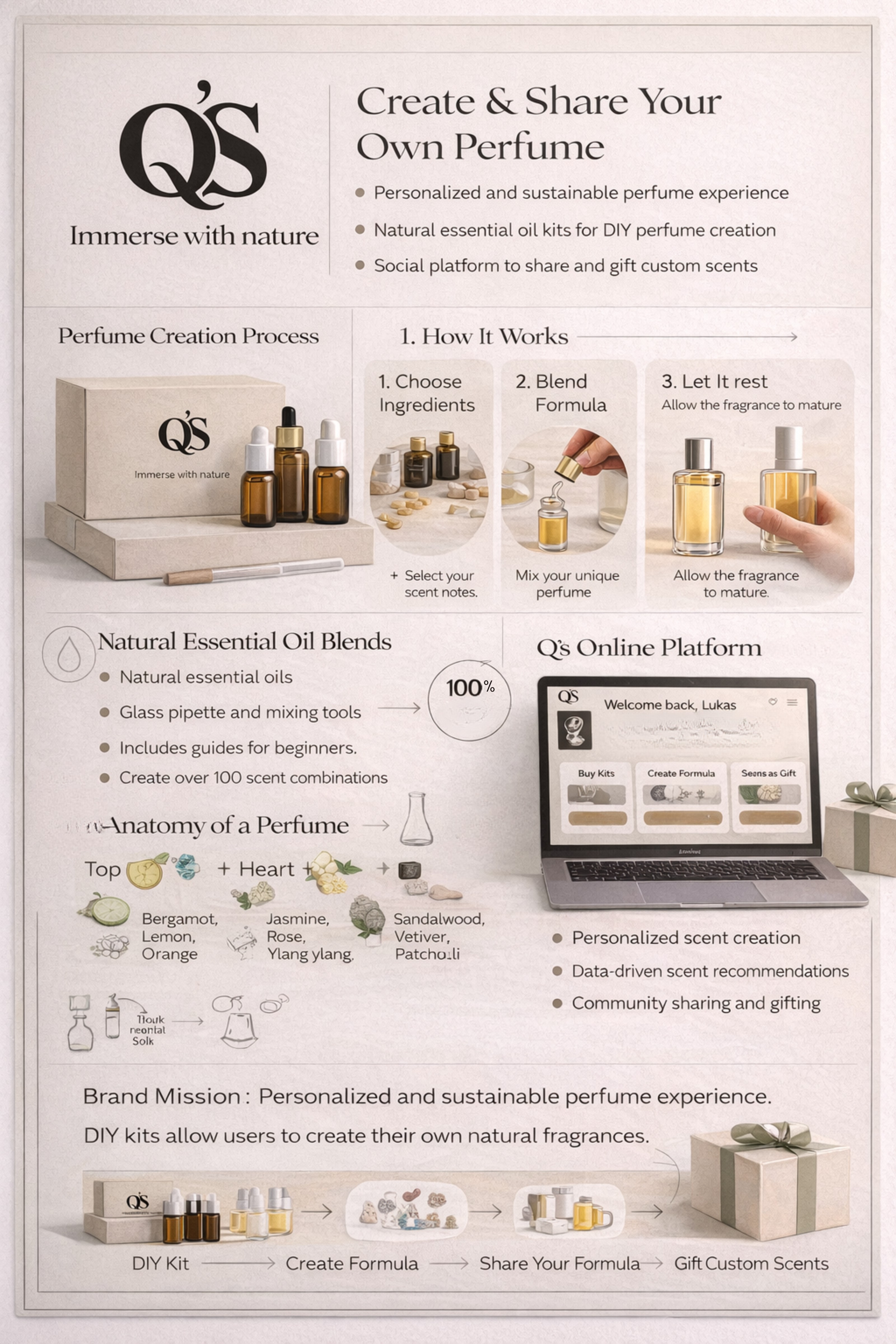
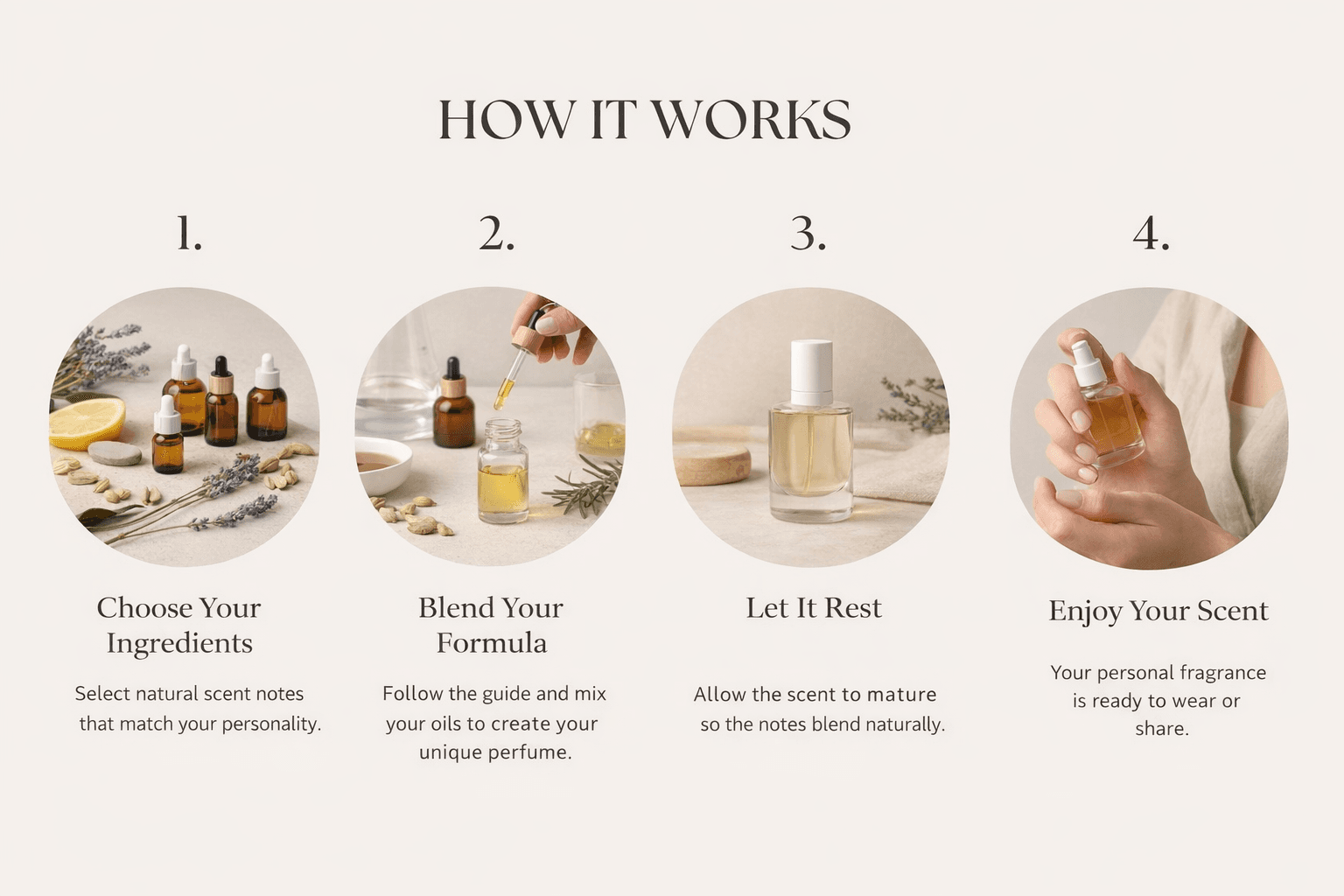
A sustainable, customer-driven perfume brand built around 100% natural essential oils and a DIY approach to fragrance. Instead of buying a finished perfume with someone else's vision of what you should smell like, customers buy the ingredients and make their own.
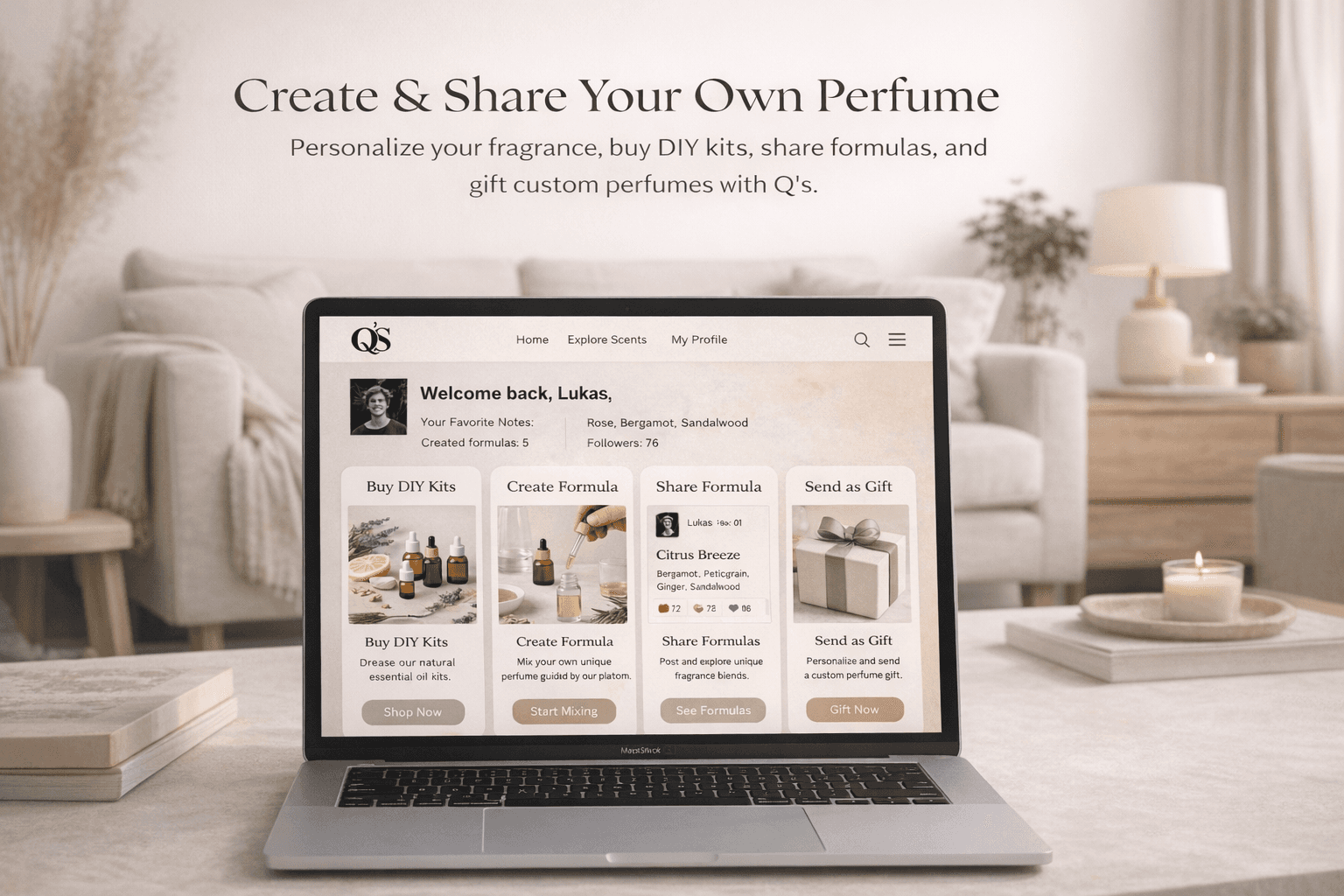
Beyond the product, the concept includes a digital community platform where users share their formulas, discover combinations created by others, and receive personalized fragrance advice. A membership model keeps users connected through a shared passion for natural scents and sustainable beauty.
The business model is built around three things: personalization, community and sustainability.
What I worked on
This was a full pitch deck project covering business strategy, brand concept, platform user experience and brand identity design.
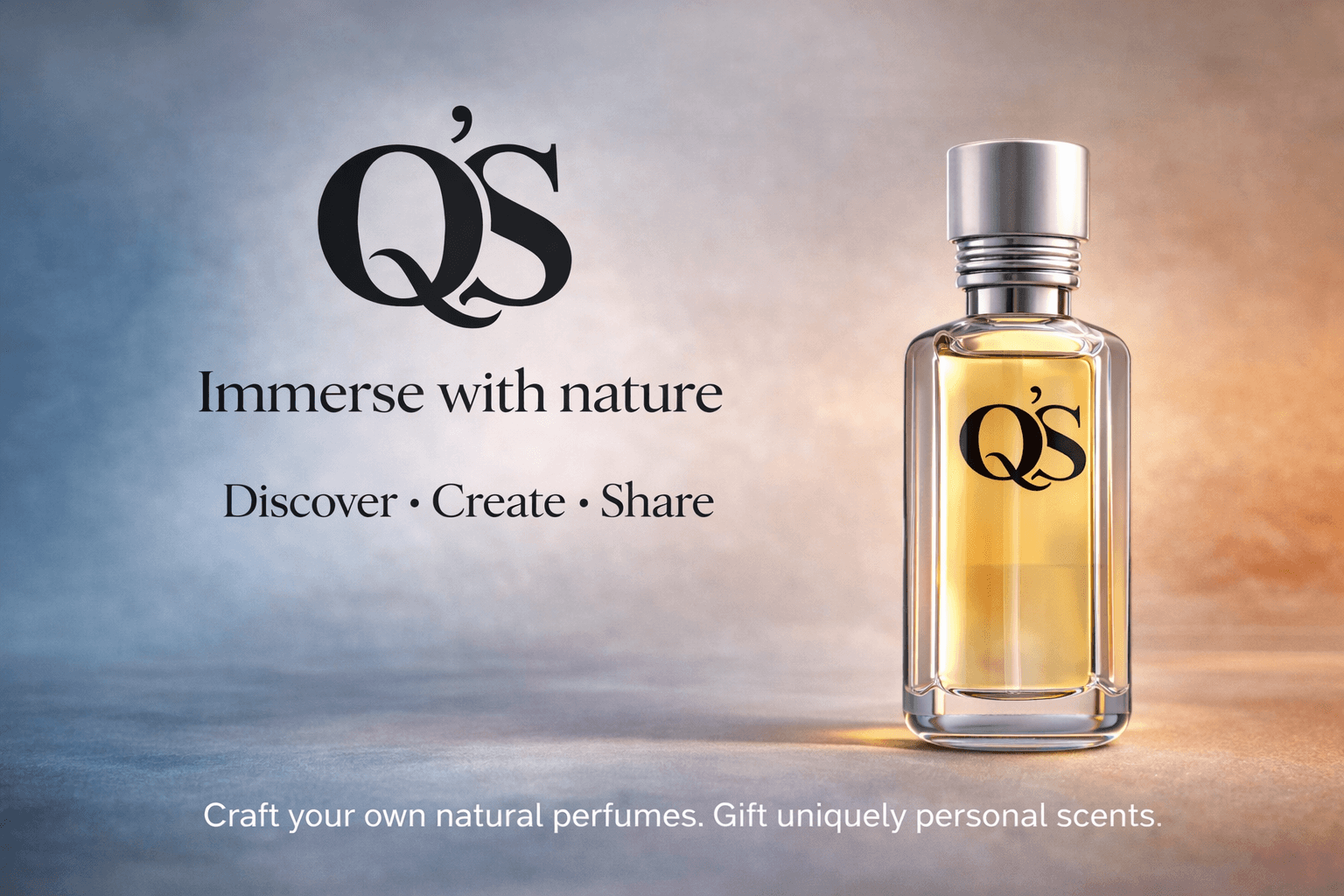
I developed the value proposition and business model logic, designed the community platform concept and user flow, created the brand identity and visual language, and built the complete pitch presentation.
What I learned
This project pushed me to think across disciplines I don't usually combine. Brand strategy, business model design, community experience and sustainability thinking all had to work together coherently.
The most interesting part wasn't the product itself. It was designing the community ecosystem around it, how people share, discover and connect through a shared interest. That's essentially a service design problem. And it reminded me that the most meaningful experiences are rarely about the object. They're about what the object makes possible between people.